
What Makes a House Iconic?
Iconic Houses Held Its First Iconic Encounter in France
SPECIAL - Best of Belgium
Restoring Richard Meier’s Douglas House
A new chapter for Richard and Su Rogers’ 22 Parkside
Home of the Future, 1925–1985: Designing Domestic Utopias at LACMA
Aalto Works Series Inscribed on the UNESCO World Heritage List
SPECIAL - Casas Icónicas en España!
Volten - Exhibition on Post-war Dutch Collective 'Liga Nieuw Beelden'
Breuer, Goldfinger and Other Hungarians
Icon for Sale: Villa Guna
City Icons Barcelona - Photo Gallery
Casa Moratiel Opens to the Public
Casa Rovira Guesthouse – Special Stay Offer
The Spirit Of Gaudí
Paolo Sustersic - At Home in Barcelona: City Living Reimagined
Architectural Conservation Trust Launched
SPECIAL –Inside Italy’s Most Iconic Houses
Iconic Encounters: Glasgow's Charles Rennie Mackintosh
SPECIAL – Women & Iconic Houses
The Humanism of Charlotte Perriand
Villa Beer opened 8 March 2026
Inside UNESCO Icons: Houses That Made History - Part 1
Inside UNESCO Icons: Houses That Made History - Part 2
Czech It Out: A Stylish Soirée of Exhibition and Film
Sopot Hosts Icons of Czech Avantgarde Exhibition
Pioneers of the Dutch Modern House - Film Screenings
Iconic Encounters: Barcelona
SPECIAL – Austria
SPECIAL – Czech Classics
SPECIAL - Vacances en France!
SPECIAL – Iconic Dreams Europe
SPECIAL – Iconic Dreams North America
Tautes Heim. Story & Details
Casa Gomis acquired by Spain's Ministry of Culture
Our Badge of Honour
New Year's Reception and Eileen Gray Screening
Funding Win Marks Anniversary of Mackintosh Acquisition
Modernist Houses Lost in the LA Wildfires
Casa d’Abreu Neto: Siza’s First Work
Pioneers of the Dutch Modern House
Iconic Encounters: London
Interview in Leading Catalan newspaper ARA
Record Number of New Iconic Houses - Part 1
Record Number of New Iconic Houses - Part 2
At Plečnik House: To Decide Where the Shadow Falls
A Story of Burnt Books and Broken Bricks
Remembering Irving J. Gill
Iconic Houses in the Media in 2024
Bauhaus Villa in Berlin For Sale
Historical Exhibition, Marie-Laure de Noailles, Painter, Conversation
Mackintosh’s Hill House Becomes an International Iconic House!
Istanbul’s Modernist Ataköy Housing Estate is At Risk
Early Furniture Designs by Le Corbusier on Permanent Display in Maison Blanche
Photo Report City Icons Amsterdam
Healing Through Architecture
Reopening An Iconic Modernist Landmark
City Icons Kick Off with Talk by Linda Vlassenrood
MORE MIES - Pure Architecture in Haus Lange Haus Esters
Through a Bauhaus Lens: Edith Tudor-Hart and Isokon
Modernism Week Lecture: 12 Years of Iconic Houses
Aluminaire House Grand Opening
Exhibition Icons of the Czech Avant-Garde
An Elementalist and Mediterranean Architecture
Icon for Sale - Loos Villa: Haus Horner
SPECIAL – UK Originals
SPECIAL – Dutch Delights!
SPECIAL – German Greats!
SPECIAL – Northern (High)Lights!
SPECIAL – Iconic Collective Housing
SPECIAL – Iconic Artist Residencies
Support the Frankfurt Declaration (on Housing)
Winy Wants a World Wonder
Welcome Atelier Volten!
Sleep in a Modernist Gem – Huis Billiet in Bruges
Iconic Houses in The Netherlands - 100 Years Van Zessen House
Exclusive Tour and Film Screening Package
The Last House Designed by Adolf Loos Will Be Built in Prague
Icons of the Czech Avantgarde
Icon for Sale - Casa Legorreta
Rietveld Day: 200 Enthusiasts Explored 3 Utrecht Icons
Hurray! 10 Years Iconic Houses
7th International Iconic Houses Conference A Huge Success
Meet Conference Co-Chair Iveta Černá
Meet Conference Co-Chair Maria Szadkowska
Eighteen Iconic Houses Under One Roof
17 June - 'Pioneers-film' Screening Amersfoort
Iconic Houses in The Netherlands - Van Eesteren House Museum
Welcome Margarete Schütte-Lihotzky Zentrum in Vienna!
Welcome Vila Volman! Jewel of Czech Functionalism
Movie Night: Adolf Loos- Revolutionary Among Architects
'Inside Iconic Houses' Case Study House #26 Webcast in Webshop
Inside Iconic Houses at Taut’s Home in Berlin
Rediscovering Forgotten Loos Interiors in Pilsen
'Inside Iconic Houses' - Online Tour Program
Iconic Houses in The Netherlands - The Diagoon House
Iconic Houses in The Netherlands - Rietveld Schröder House
Rietveld Houses Owners Association
Corberó Space: New Life for Hidden Jewel
Iconic Houses in The Netherlands - Pierre Cuypers' House and Workshops
Reeuwijk Celebrates Completion of Restoration Rietveld Homes!
Iconic Houses in The Netherlands - Van Doesburg Rinsema House
Welcome Rietveld's Van Daalen House!
Architect Harry Gessner Passed Away at 97
Watch Pioneers of the Dutch Modern House Now On Demand
Icon Saved: Dorchester Drive House
Iconic Houses in the Netherlands – Berlage’s Masterpiece
Iconic Houses in The Netherlands - Het Schip
Inside Iconic Houses - Tour of Maison Cazenave
Inside Iconic Houses Tours Vizcaya Museum & Gardens in Miami
Casa Masó Celebrates 10 Year Anniversary
Inside Iconic Houses tours Roland Reisley's Usonian Frank Lloyd Wright House
Rietveld’s Experimental Housing in Reeuwijk Saved
Serralves Villa after restoration
Portraits of the Architect - Interview with Gennaro Postiglione
Test Labs for New Ideas - Interview with Natascha Drabbe
Inside Iconic Houses - Isokon Building
Inside Iconic Houses - 16 December: Sunnylands with Janice Lyle
BCN-BXL Coderch-De Koninck - Beyond Time
New Chairman Architect Nanne de Ru on The Perfect Platform
Health and Home - Interview with Beatriz Colomina
A Life Less Ordinary – Interview with Valentijn Carbo
Invisible Women - Interview with Alice T. Friedman
Winy Maas on the Green Dip
Anita Blom on Experimental Housing of the 1970s
Women’s Worlds - Interview with Natalie Dubois
The Culture of Living - Interview with Robert von der Nahmer
Hetty Berens: A Fresh Take on Modernism
Niek Smit on Supporting Modern Heritage
Alice Roegholt on Amsterdam’s Working-Class Palaces
July is Iconic Houses Month
Hans van Heeswijk on The Pioneers of the Dutch Modern House
Wessel de Jonge on Dutch Icons at Risk
Save Maison Zilveli - Sign the Petition!
How a Building Tells a Story - Recorded Event
Toolkit for Owners of a Modern House
13 Aalto Sites Nominated for UNESCO World Heritage
Villa Beer At Risk - Sign the Petition!
Business Cards of Stone, Timber and Concrete in the Brussels Region 1830-1970
Exhibiting & Visiting Modernist Monuments
Fostering Well-Researched Responsible Design
ICONS AT RISK
Enjoy a virtual visit to the California House and a Q&A with architect Peter Gluck
Exhibition 'Modernism and Refuge'
A Hidden Gem of Postmodernism
New Centre for Historic Houses of India
An Online Chronicle of the Douglas House
Villa Henny, geometric style icon in The Netherlands
A Mendini temple in Amsterdam
IH-lectures USA & Canada Feb 2020 on Melnikov House
Sponsors and Friends
An Afternoon with the Glucks
Chandler McCoy on Making Modern Houses Sustainable
Catherine Croft: Getting Away from the Demolition Mentality in the UK
Patrick Weber on Discovering an Unknown Icon
Fiona Fisher on Iconic Interiors
Jocelyn Bouraly on Villa Cavrois
Mireia Massagué on finding success through a new kind of partnership
Danish Moderns – Looking Back at Our Mini-Seminar
Venturo house complements Exhibition Centre WeeGee’s offering
Lecture report: Remembering Richard Neutra
Hôtel Mezzara and the Guimard Museum project
We welcome 13 new members!
BREAKING NEWS: 8 Wright Sites Inscribed on Unesco World Heritage List!
LECTURE 29 August - Raymond Neutra: My Father and Frank Lloyd Wright
Iconic Reads
Iconic Houses End Year Message
City-ordered rebuild of landmark house stirs debate: Appropriate or overreach?
Kohlberg House Restoration in Progress
Planned Demolition of Rietveld Homes in Reeuwijk
Renovation Gili House in Crisis
An Iconic Saga
Restoring Eileen Gray’s Villa E-1027 and Clarifying the Controversies
Modernism on the East Coast
Iconic Houses in Latin America
Conference testimonials
House Tours May 2018
Expert Meetings
Natascha Drabbe - Iconic Houses: The Next Chapter
Terence Riley -KEYNOTE SPEAKER- on Philip Johnson
New era for Villa E-1027 and Cap Moderne
Hilary Lewis on Philip Johnson and his Glass House
John Arbuckle on Great House Tours
William D. Earls on the Harvard Five in New Canaan
Stover Jenkins on Working for Philip Johnson
Frederick Noyes on his Father’s House
Scott Fellows and Craig Bassam on their Passion for Preservation
Jorge Liernur -KEYNOTE SPEAKER- on Latin American Modernism(s)
Fabio Grementieri on Modernism in Argentina
Catalina Corcuera Cabezut on Casa Luis Barragán
Renato Anelli on Lina Bo Bardi’s Casa de Vidro
Tim McClimon on Corporate Preservation
Amanda Nelson on Building Donor Relationships
John Bacon on Planned Giving
Jean-Paul Warmoes on the Art of Fundraising in America
Chandler McCoy on Why Less is More
Katherine Malone-France on Moving with the Times
Anne Mette Rahbæk on Philanthropic Investments and Preservation
Peter McMahon on Saving Modern Houses on Cape Cod
Toshiko Kinoshita on Japanese Modern Heritage Houses
Roland Reisley on Life in a Frank Lloyd Wright House
5th Iconic Houses Conference May 2018
Kristin Stone, Pasadena Tour Company
Restoring the past: The Diego Rivera and Frida Kahlo Home Studio
Behind the Scenes: Hendrick de Keyser Association
Crosby Doe, Architecture for Sale
Latin America Special – Focus on Mexico
De Stijl in Drachten
Preserving the Nancarrow House-Studio
Meet the Friends - Nanne de Ru
Latin America Special – Focus on Brazil
Jan de Jong’s House is Latest Hendrick de Keyser Acquisition
Stay in a Belgian Modernist Masterpiece
In Berlin’s Modernist Network
Rietveld-Schröder House Celebrates De Stijl Anniversary
Meet Our New Foundation Board Members
Maintaining Aalto's Studio – Linoleum Conservation
Virtual Tour of a Papaverhof Home in 3D
Getty Grant for Villa E-1027
Plečnik House in Ljubljana
Iconic Dacha
Iconic Houses: A Bohemian Road Trip
Work in Progress: Capricho de Gaudí
11 Le Corbusier Homes now on Unesco World Heritage List
At home with Le Corbusier
Henry van de Velde’s Study in Haus Hohe Pappeln Restored
Lynda Waggoner reports
A Conference to Remember
4th International Iconic Houses Conference
Guest of Honor - Harry Gesner
Fallingwater: European Lecture Tour
Wright Plus 2016 Walk
Susan Macdonald, Getty Conservation Institute
John Mcllwee, Garcia House
Meet the Friends – Elisabeth Tostrup
Iconic Houses: The Story So Far
Willie van Burgsteden, designer Iconic Houses
Buff Kavelman, Philanthropic Advisor
Meet the Friends - Frederick Noyes
Sheridan Burke, GML Heritage
Meet the Friends - Raymond Neutra
Sidney Williams, Frey House
Franklin Vagnone and Deborah Ryan, Museum Anarchists
Meet the Friends - James Haefner
Toshiko Mori, architect
Malachi Connolly, Cape Cod Modern House Trust
Meet the Friends - Penny Sparke
Lucia Dewey Atwood, Eames House
Cory Buckner, Mutual Housing Site Office
Jeffrey Herr, Hollyhock House
Speaking Volumes: Building the Iconic Houses Library
Sarah Lorenzen, Neutra VDL Studio and Residences
Ted Bosley, Gamble House
Keeping It Modern - Getty Conservation Grants
Meet the Friends - Thomas Schönauer
Wim de Wit, Stanford University
Linda Dishman, Los Angeles Conservancy
Jesse Lattig, Pasadena Heritage
Join us in Los Angeles! Update
Work in Progress: Casa Vicens
Work in Progress: Van Wassenhove House
Work in Progress: Villa Cavrois
Work in Progress: The Pearlroth House
Conference calls!
Follow us!
Third Iconic Houses Conference a huge success
Conference House Tours Barcelona
Marta Lacambra, Fundació Catalunya-La Pedrera
Natascha Drabbe, Iconic Houses Foundation
Special speaker Oscar Tusquets
Jordi Tresserras, UNESCO Network ‘Culture, tourism and development’
Christen Obel, Utzon Foundation
Elena Ruiz Sastre, Casa Broner
Fernando Alvarez Prozorovich, La Ricarda
Tim Benton, Professor of Art History (Emeritus)
Susana Landrove, Docomomo Spain
Rossend Casanova, Casa Bloc
Icon at Risk: Casa Gomis / La Ricarda
Conference Program 25 November 2014
Jordi Falgàs, Casa Rafael Masó
Documentary La Ricarda
Marga Viza, Casa Míla/La Pedrera
Celeste Adams, Frank Lloyd Wright Trust
Conference 25 November 2014 at La Pedrera
Henry Urbach, The Glass House
Victoria & Albert Museum London November 12, 2013
Tommi Lindh, new director of the Alvar Aalto Foundation and Museum
Iveta Černá, Villa Tugendhat
Lynda Waggoner, Fallingwater
Kimberli Meyer, MAK Center
Rent a house designed by Gerrit Rietveld
Barragán House on Screen
Gesamtkunstwerk – An Icon on the Move
Triennale der Moderne 27 September - 13 October 2013
Prestigious Art Nouveau mansions in Brussels open
September 14 + 15: Heritage Days in Paris
June's New Arrivals: Museum Apartments
Iconic Houses is now on Twitter and Facebook
Corbu’s Cabanon: Reconstruction and Lecture
Projekt Mies In Krefeld: Life-sized model of the Krefeld Clubhouse
New arrivals: Spain special
MAMO: Le Corbu’s ‘Park in the Sky’ open 12 June
Taut's Home wins Europa Nostra Award
Annual Wright Architectural Housewalk: 18 May
Frank Lloyd Wright Homes on Screen
Message from the Editor
Neutra’s House on Screen
Michel Richard, Fondation Le Corbusier
Symposium The Public and the Modern House
Melnikov House on Screen
Iconic Houses in the media
Message from the Editor
Round Table Review
Eileen Gray House on Screen
Copy Culture
At Home in the 20th Century
New 20th century Iconic Houses website launches
Philippe Bélaval, Centre des monuments nationaux
Villa Beer opened 8 March 2026
 Fabian Schellhorn.jpg "Photo: Fabian Schellhorn.")


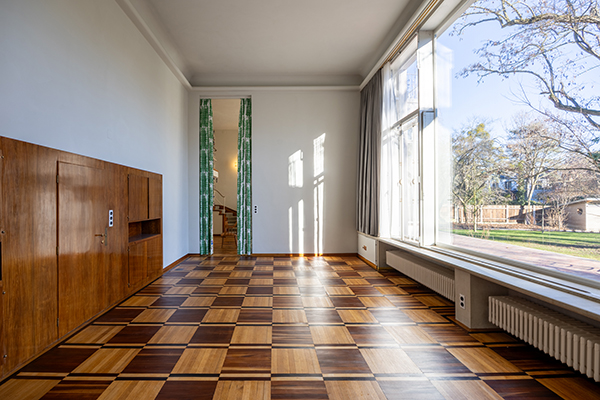
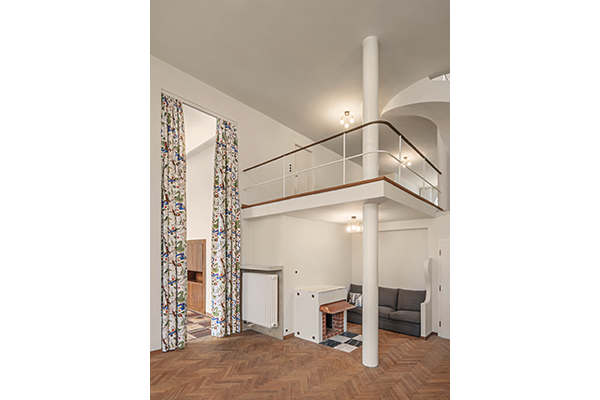
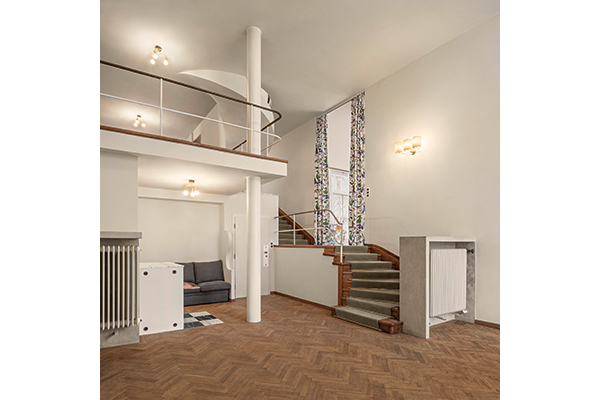
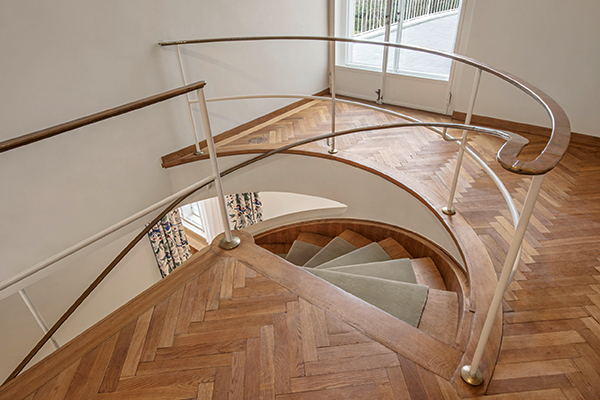
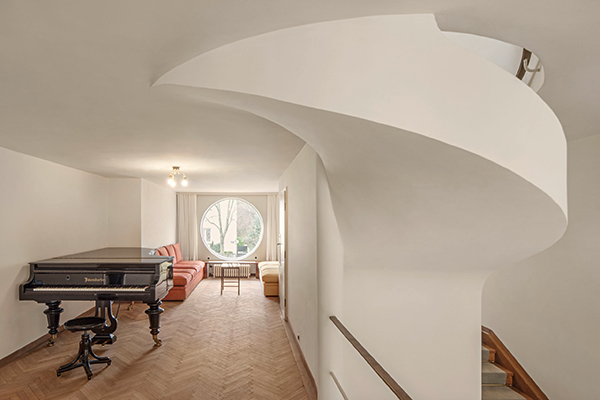
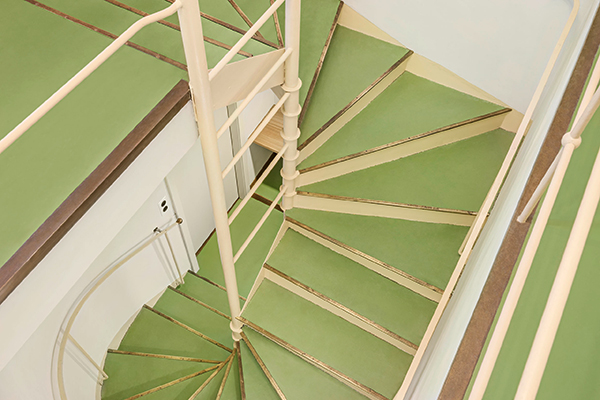
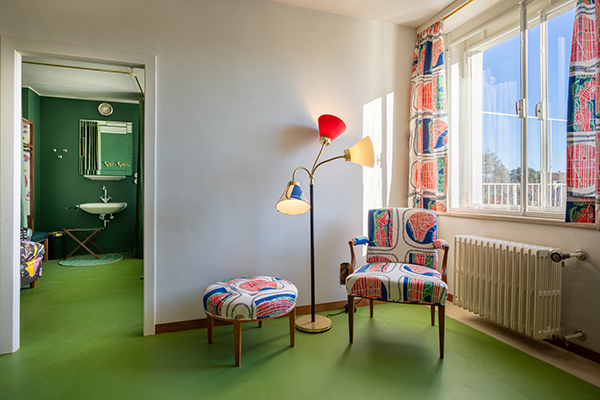
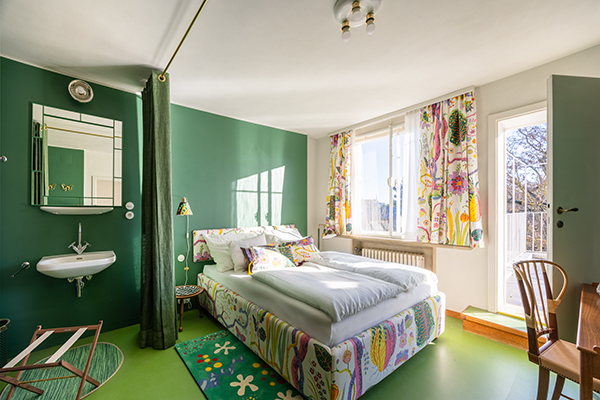

- Photo: Fabian Schellhorn.
- Photo: Herta Hurnaus.
- Photo: Herta Hurnaus.
- Photo: Herta Hurnaus.
- Photo: Herta Hurnaus.
- Photo: Herta Hurnaus.
- Photo: Herta Hurnaus.
- Photo: Herta Hurnaus.
- Photo: Herta Hurnaus.
- Photo: Herta Hurnaus.
- Photo: Herta Hurnaus.
- Photo: Herta Hurnaus.
- Photo: Herta Hurnaus.
- Photo: Stefan Huger.
- Photo: Stefan Huger.
- Photo: Stefan Huger.
- Photo: Stefan Huger.
A key work of Viennese Modernism open to the public for the first time
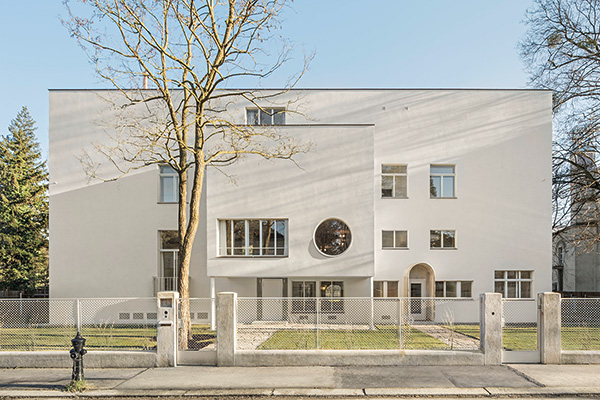
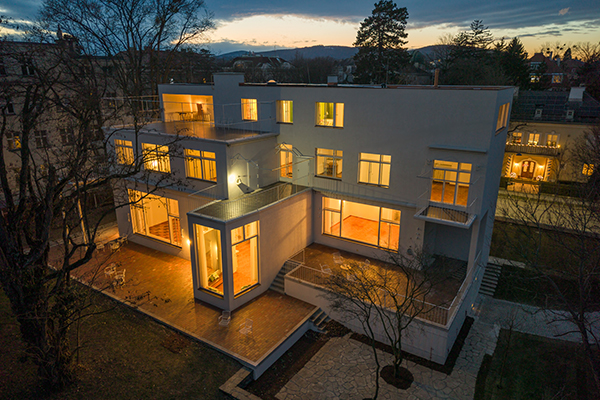
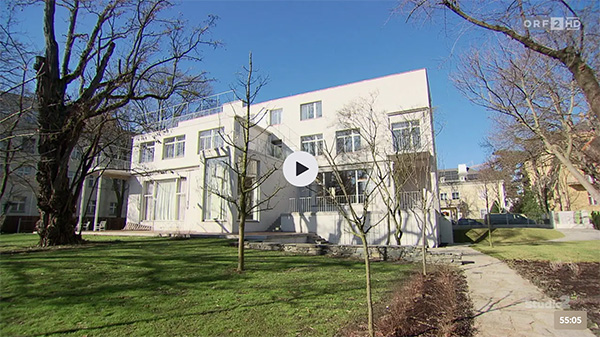
Villa Beer in Vienna-Hietzing, designed in 1929 by Josef Frank and Oskar Wlach for the Beer family, has reopened after years of intensive research and meticulous restoration. Marked by a festive inauguration and significant media attention, one of the most important residential buildings of Viennese Modernism can once again be experienced in its original spatial and aesthetic quality.
Under the direction of owner Lothar Trierenberg (depicted in the slideshow above) and architect Christian Prasser (cp-architektur), Villa Beer was restored in close collaboration with specialists, skilled craftspeople, and the Federal Monuments Office. The restoration investigations that preceded the renovation were led by Alexandra Sagmeister.
Villa Beer is considered a key work of Austrian modernism. Architecture theorist Christian Kühn emphasised that its significance ‘can hardly be overestimated,’ while Friedrich Achleitner described it as ‘probably the most important example of Viennese residential culture of the interwar period.’ Internationally, it ranks alongside icons such as Villa Tugendhat, Villa Savoye and Villa Müller.
Its opening offers an opportunity to rediscover the work of Josef Frank. Villa Beer marks the pinnacle of his architectural career and stands for an open, people-friendly modernism beyond dogmatic austerity.
Careful restoration
The aim was to preserve the house from decay and secure its long-term future, as well as to restore its unique character and adapt it to its planned use.
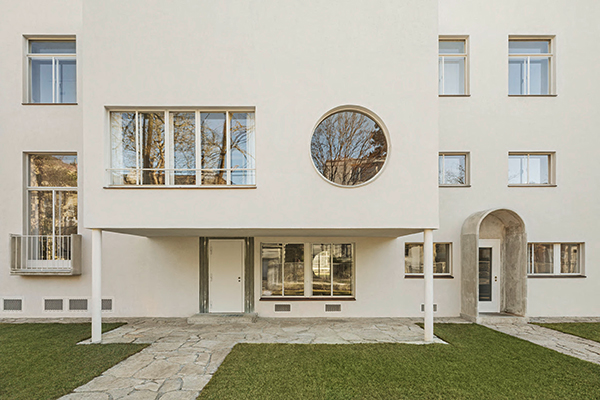
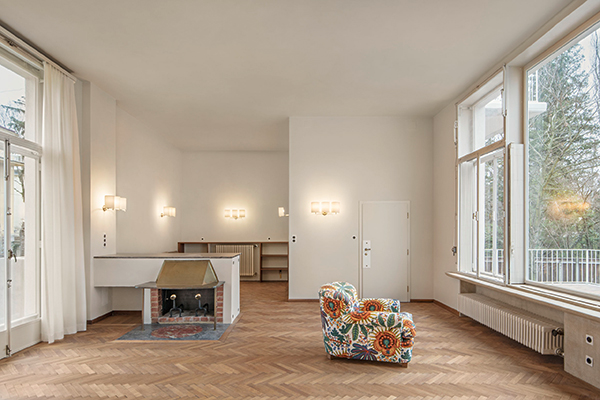
Although the house had been rebuilt several times throughout its history, it had not undergone any fundamental renovation for a long time. During the current renovation, the areas from the ground floor to the first floor were restored to their original room layout. To achieve this, windows that had been added later were closed and additional walls were removed. The open room layout, the light-flooded interiors and the unusual materials now characterize the house once again as they were intended.
In a first decisive step, the house was given a new, stable foundation from the ground up and the basement was completely renovated. The original room structure was retained but adapted to the necessary infrastructure for the future museum operations. Today, the area houses a visitor foyer with a small shop as well as rooms for education and administration, a cloakroom, sanitary facilities and technical rooms.
As part of the basement renovation, the terrace in front of the living room was also converted into a basement, creating a climate-controlled exhibition space for the Villa Beer archive. The two levels of the basement were connected by a lift.
Garden design
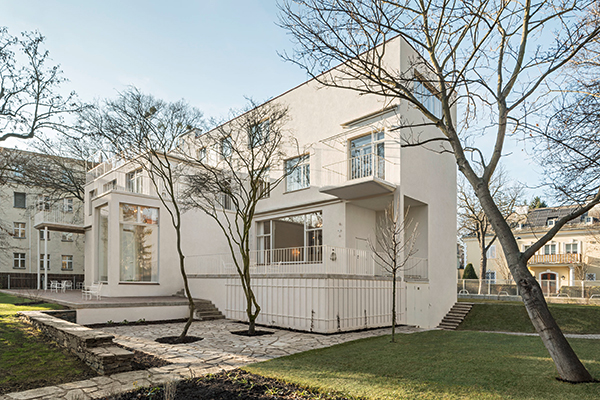
The landscape architecture firm Auböck + Kárász was responsible for the garden design, which deliberately drew on the historical context of the property. Mirror panels in the garden fence indicate that the property was originally twice as large. In her design, Maria Auböck attached great importance to preserving the existing tree population as far as possible. Frank and Wlach also understood nature to be an integral part of the design concept for the house.
Particularly noteworthy is the replanting of two 60-year-old black locust trees (the original trees had to be removed due to fungal infestation) in front of the villa. The current garden was designed to highlight the original relationship between the house and the garden, as well as to serve as a place for visitors to stroll and hold events.
Construction costs and support from the City of Vienna
The project costs for the renovation amount to around 10 million euros. The City of Vienna supported the renovation with a one-off contribution of 500,000 euros, while subsidies from the Federal Monuments Office amount to around 200,000 euros. Further subsidies from the City of Vienna amounting to 200,000 euros are earmarked for the operation of Villa Beer as a place of education.
Plan for the construction of a villa for Mr Julius and Mrs Margarete Beer - The history of the Beer family
Despite several years of research by the Villa Beer Foundation, the sources on the origins of Villa Beer and the fate of its builders remain incomplete; much of the information is based on a few surviving documents and accounts from descendants.
The property in the Hietzing villa district, acquired in 1929 by Julius Beer and his wife Margarethe, was designed by the architects as a prestigious residence for the art-loving couple, who belonged to liberal Judaism, and reflected both their social status and their understanding of culture. The villa was the architects' largest private commission.
The history of Villa Beer is inextricably linked to the fate of its Jewish owners. The family's happiness in their new villa came to an end shortly after its completion in the early 1930s, when Julius Beer lost his position and ultimately his shares in the company following professional and financial setbacks. As a result, he was no longer able to service the loan instalments. Although the family retained the right to live in the house, from 1932 onwards they had to rent it out repeatedly to finance the repayments. The tenants during these years included prominent artists such as Richard Tauber, Jan Kiepura and Martha Eggerth, as well as their secretary Marcel Prawy, who lived in the house until they were expelled in 1938.
After Hitler seized power in Germany in 1933, the Beer family's situation deteriorated steadily and was finally torn apart after Austria's annexation by Nazi Germany in 1938. While some family members managed to flee into exile, their daughter Elisabeth Beer was deported in 1940 and murdered in Maly Trostinez in 1941.
The fate of the family is exemplary of the disenfranchisement, expulsion and extermination of Vienna's Jewish population.
The architects' lives also reflect this turning point: Josef Frank emigrated to Sweden with his wife in 1934. Oskar Wlach had to leave Austria in 1938 and fled to America, where he was never able to repeat his successes in Vienna.
The biographies of the Beers, Franks and Wlachs thus refer to the numerous Viennese Jews who were forced to emigrate and to the irretrievable loss that this persecution meant for the cultural and social diversity of the city.
Rediscovering Josef Frank
What is modern? It has been around a century since Josef Frank posed this question, which he pursued with equal measures of seriousness and polemic throughout his life, at the Werkbund conference in Vienna in 1930. Two months later, the Beer family moved into their new house on Wenzgasse, which was to become the most significant work by Frank and his long-time professional partner, Oskar Wlach.
The Villa Beer is an icon of architectural history and plays a key role in Austrian modernism. Unlike its international counterparts, such as Villa Savoye in Poissy (1928–31) by Le Corbusier and Pierre Jeanneret or Villa Tugendhat in Brno (1928–30) by Ludwig Mies van der Rohe, both of which were listed as historic monuments in the 1960s, it did not receive this status until 1987.
Frank, born in 1885 in Baden near Vienna, is considered the most important representative of the architect generation after Adolf Loos and Josef Hoffmann. However, Josef Frank and Oskar Wlach abandoned the strict logic of the classical floor plan in favour of an open, three-dimensional spatial structure. Different heights and sizes are combined to create a lively sequence that makes movement, orientation and visual relationships intuitively tangible. In Frank's 1930 essay ‘The House as Path and Place,’ Frank describes this principle as a playful interplay.
On the outside, this ‘inner freedom’ of the villa is continued in an asymmetrical, differentiated façade design. Basements, attics, terraces and balconies extend the living concept outdoors and create spaces for movement, retreat and socialising.
Frank's vision of modern architecture aimed at an organic, lifelike house that frees living from rigid rules, opens space for spontaneity and dissolves the boundaries between architecture, interior space and urban context – an approach that continues to shape modern living to this day.
“In its overall conception, the house represents a masterpiece in the relationship between rules and freedom.” Friedrich Achleitner, 2010
The opening to visitors now allows Josef Frank's work to be rediscovered.
In addition to the architecture, Josef Frank and his partner Oskar Wlach also designed the entire interior of Villa Beer, including furniture, fabrics and curtains. These designs were produced at the time by their joint company Haus & Garten.
Over the decades, the built-in furniture has been preserved, but most of the original furnishings have been lost, except for a few pieces. The preserved built-in elements were restored with great care, and missing parts were replaced. Floors, fireplaces, security grilles, the dumbwaiter and radiators were repaired and, where necessary, rebuilt to a high standard of craftsmanship and historical accuracy, in some cases with the involvement of the original contractors. This work was carried out with great attention to detail and a thorough knowledge of the construction methods used at the time.
A conscious decision was made not to reconstruct lost furniture or add additional furnishings to the rooms. Instead, empty spaces were left to create room for exploring the history of the house and its inhabitants.
‘In future, the house should be filled with life and carry the ideas of modernism, as understood by Josef Frank, into the present,’ says Lothar Trierenberg (Managing Director of the Villa Beer Foundation).
A lively meeting place
Program and education
With its opening, Villa Beer will become more than just a monument: it is set to become a lively venue for architecture, culture and research. Under the direction of Katharina Egghart, a diverse program of guided tours, discussions, music and literary events, symposia and educational offerings is being developed.
‘Even though Villa Beer will be open to the public in future, its character as a residential building will be preserved as far as possible. Visitors should feel like welcome guests,’ says Katharina Egghart (Managing Director of the Villa Beer Foundation).
The house will be accessible as part of individual and interactive guided tours that highlight architectural, social and cultural contexts.
From Wednesday to Sunday, there will be regular overview tours on the architecture and history of the house. In addition, themed tours will offer in-depth insights – for example, on the restoration of the villa, Josef Frank's furniture and fabric designs, or social life in the villa. A central component of the programme will also be an examination of Jewish life in Hietzing before 1938. Julius Beer supported, among other things, the construction of the architecturally outstanding Hietzing Synagogue. Finally, the surrounding urban space will be included in the programs – from the neighbouring villas of Adolf Loos, who played an important role for Josef Frank, to the Werkbundsiedlung, which was initiated and co-designed by Josef Frank.
In addition, guided tours are offered for private groups, circles of friends, students, architects and other visitors from Vienna and around the world; these can be booked individually, depending on capacity.
On weekends, it will also be possible to visit the house for a limited period without a guided tour to discover and experience the architecture independently. Guests can enjoy the house almost as if they were residents, browsing through a book from the library and sitting in an armchair. For safety reasons, however, not all rooms in the house are accessible during free visits.
School programs
From autumn 2026, programs for schoolchildren of various ages, workshops and academy formats for adults, as well as walks, will expand the range of activities on offer. They will cover the architecture and history of Villa Beer and its immediate surroundings.
Science, research and residency programs
An annual symposium, collaboration with scientific institutions, research residencies and a series of publications are also planned.
The house has an archive and a collection that will be accessible for scientific purposes in the future.
‘Villa Beer is also intended to become a place of learning and teaching for architecture as well as for the complex history of the interwar period,’ says Lothar Trierenberg (Managing Director of the Villa Beer Foundation).
Living in Villa Beer
For researchers and guests who want to experience Villa Beer in its original function as a residence, a new living area has been created in the attic, consisting of a kitchen, bathroom and three guest rooms. It invites visitors not only to view the house, but also to live in it.
The rooms are furnished with textiles and furniture designed by Josef Frank, which are still manufactured today by the traditional Swedish manufacturer Svenskt Tenn. Thanks to the support of the Beijer Foundation (owner of Svenskt Tenn), the attic can now be experienced as a living environment in the spirit of Josef Frank.
The guest rooms are primarily intended for the artist and research-in-residence programme, but are also available for rent on request, subject to availability (double room 350 to 450 euros/ night).
The focus is on an authentic living experience: accordingly, the rooms are designed as guest rooms and – as was customary in the 1930s – equipped with a washbasin; the bathroom is shared. In addition, guests have access to a small kitchen, a dining room and the roof terrace.
Cultural encounters and events at Villa Beer
The Beer family also had the house built as a venue for larger gatherings, with a music room and a Bösendorfer grand piano, played by trained pianist Grete Beer, at its centre. A series of events, concerts, readings and discussions are planned to revive this aspect of the villa's history.
It will also be possible to hire the rooms and garden of Villa Beer for private events, business functions, small conferences or cultural events. Above all, Villa Beer is intended to be a place for culture, research, and education.
Biographies
Josef Frank
Josef Frank (1885–1967) was an Austrian Swedish architect, designer and theorist of modernism. He studied architecture at the Vienna University of Technology and made his mark as co-founder of the Austrian Werkbund and as a partner of Oskar Wlach with his company ‘Haus & Garten’. Frank's work is characterised by a people-oriented, homely modernism that deliberately set itself apart from strict functionalism. Due to increasing anti-Semitism, he emigrated to Sweden with his wife in 1934, where he worked for the company Svenskt Tenn and became internationally known for his designs for furniture and textiles. His work is still considered a central contribution to humanistic modernism today.
Oskar Wlach
Oskar Wlach (1881–1963) was an Austrian architect and designer of the Vienna Modernism movement. He studied architecture at the Technical University. After graduating, he worked with Oskar Strnad as a freelance architect from 1907 onwards. In 1913, Josef Frank joined them as a third partner. Wlach and Frank were co-owners of the Viennese interior design company Haus & Garten, which played a central role in spreading modern interior design. His works combine functional clarity with high-quality craftsmanship. After the Anschluss in 1938, Wlach was persecuted as a Jew and emigrated to the USA, where he continued his architectural work but was no longer successful professionally.
Lothar Trierenberg
Lothar Trierenberg attended the Waldorf School in Vienna-Mauer and then studied music and movement education at the University of Music in Vienna. In 1998, he founded the coffee house furniture gallery ‘das möbel’, which he expanded in 2006 to include his own furniture store, which he ran until 2020. Since 2021, he has been managing director of the Villa Beer Foundation, which was established to rescue and sustainably develop Villa Beer.
Katharina Egghart
Katharina Egghart has been managing director of Villa Beer Foundation since March 2024 and is responsible for the organization and management of Villa Beer. Prior to this, she worked for several years at the MAK – Museum of Applied Arts in Vienna. As an art historian and business economist, she has extensive experience in the fields of cultural management, sustainability and international brand strategies.
Christian Prasser
Christian Prasser studied architecture at the University of Applied Arts Vienna under Prof. Hans Hollein and deepened his spatial studies through a two-year collaboration with director Robert Wilson before founding his own architectural firm, www.cp-architekur.com, in 1999. Prasser has been a professor of interior design at the New Design University in St. Pölten since 2012. The firm has received numerous awards in the fields of hospitality, building renovation, timber construction and product design.
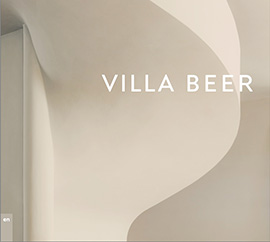 A book about Villa Beer is just launched and available in an English and German edition at the Villa Beer shop in Vienna and can be ordered via email.
Posted March 11, 2026